Showing posts with label email. Show all posts

Monday, July 29, 2013

Bad, Fast Emails

One of the primary wonders of the internet is the speed with which it can disseminate information.  Information, unfiltered and unadulterated, can speed around the world at the speed of a tweet.

This is powerful and wonderful and awe inspiring when it works to share word about a political movement, a scientific discovery or the birth of a prince.

But, when someone makes a mistake on your email address in a distribution list, it can speed around the world almost as fast as word of the latest celebrity arrest.  It can take longer to get things worked out than the endless stories about the celebrity's paroles and rearrests.

Similarly, if a mistake is made in a newsfeed or newspaper, that mistake will be picked up and circle the globe a couple of times before you burn your tongue on your morning coffee.

Now, more than ever, accuracy is important.  It is so easy to fix errors in a document, factual accuracy might not seem that important.  It is not primary document accuracy that is so important but what I like to call the echo document accuracy.   Errors carried by echo documents have the greater impact.  Echo documents are all the reposts and retweets that a primary document creates.  Once echo documents start bouncing around, it is very difficult to contain them.

Now, more than ever, it is important to contain and correct mistakes as quickly as possible.  Nothing is as fast as a bad email!
Enhanced by Zemanta

Monday, July 15, 2013

Too much of a good thing

I made a mistake a while back.  I contributed to a political party.  The reason that was a mistake is now they will not stop calling me.   On a recent weekend (not during an election mind you), I got four calls asking for donations.  I have asked to be taken off of their call list.

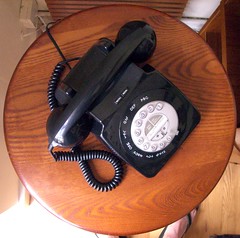
Home phone
(Photo credit: :: Wendy ::)
In a similar mistake, I signed up for something online that is supposed to support my high school alma mater. Very soon I was getting emails every day trying to sell me something.  I have stopped even looking at those emails.  They now get deleted as soon as they show up in my inbox.  I haven't yet taken myself off of the distribution list out of some sort of alumni guilt.  That is probably going to change soon.

With the cost of reaching out to customers and prospective customers falling to almost nothing, it is more important than ever that companies and organizations remember who bears the greatest cost every time they reach out to a contact.  The contact does.

Even with permission marketing, you can reach out too much.  Even with those who are already your fans or supporters or customers, if you call four times in one weekend, you are going to annoy them.

Organizations need to understand that there is a cost of time and attention every time they call or email someone.  They need to be sensitive to the fact that both time and attention are in short supply for most people.  IF they are going to contact you frequently, they should provide you something of value with that contact.  IF they are going to contact you frequently, they should recognize that it is easy to cross the line into annoyance and get put on the don't call list.

In the best of situations, organizations create reasons for their customers and supporters to reach out to them!  It's hard to overdo it when you have your customers contacting you!
Enhanced by Zemanta

Tuesday, December 18, 2012

Blurring the Lines

Reposted:  This blog first ran on 12/18/12
I read an article in my local newspaper last week that breathlessly reported about a recent study indicating that a huge percentage of employees (60%) check personal social media sites more than once a day while at work.  The article goes on to calculate the lost productivity and the unfairness of this to employers.

I think the reporter is looking at this issue too narrowly.  The issue, as I see it, is more about the blurring of the lines between home and work.  I acknowledge that many people access personal social media sites at work.  I acknowledge that when you are updating your Facebook account you can't be balancing the ledgers or helping customers.  But what the reporter didn't explore was how often employers do the same thing to employees traditionally non-work hours. 

With the prevelence of smartphones, tablets and laptop computers, employees can access their work email accounts, if not the entirity of their computer files, from the comfort of the kitchen table.  Furthermore, as this access has become more prevalent, access beyond the work day is not considered going above and beyond the call of duty, it is expected.  How many of you have had someone ask you on Monday morning why you hadn't yet responded to the email that they sent you on Saturday?

Working at home has always happened.  My Dad's had his briefcase and "paperwork" that needed to be worked on.  I have replaced his briefcase with a laptop and a cellphone.  What is different now is that with cellphones, tablets and laptops many of us are expected to be on call 24/7.  Even vacations aren't sacrosanct.

Understand, I am not complaining about this.  I have chosen to work in the field of marketing communications.  As a media spokesperson, I have usually have had to be on call.  Before cellphones, I often wore a pager.  Likewise, I have also almost always brought work home.  Some of that is because I sometimes find it easier to write away from the office. 

But if we are going to have a conversation about how mobile technology has allowed more people to access personal social media during work hours, I think it is important to also acknowledge that the same media has also made it possible to access work from home.  More and more, defining "work hours" has become difficult.