Showing posts with label frequency. Show all posts

Wednesday, July 17, 2013

A Strong, Simple Message

One of the most effective strategies for cutting through the message clutter is to have consistency of message.  Convincing non-marketing leaders of the need for consistency of message can be one of the hardest things to do as a marketer.

To be effective your message must be clear, concise and repeated frequently. In a mass media strategy, that means replaying the same ad on the same media over and over and over again. In a new media strategy, while message repetition has a place, message consistency becomes more important. Your message will be displayed differently and probably less frequently on different media. Done well, it could be MANY different media.  So if someone sees your message on a banner ad, a magazine ad, a retweet, in a radio story and on your blog, there had better be the same message elements running through each of those, or you have lost out on a golden opportunity to drive home your key message.

One of the scariest things about social media for most marketers is loss of control of the message.  The conversation of social media is much more difficult to manage than the monologues of mass media.  One of the exciting things about social media for most marketers is that you can interact and engage customers and potential customers directly.

There are some things you can do to help make sure your message is heard:
  • Select a strong, simple message and use it consistently and constantly in everything you do.  
  • Make sure your message is heard and understood and used by all internal audiences because internal audiences carry your message out into social media.  Make sure they are carrying the message you want them to!
  • Make sure your strong, simple message is translated effectively into tweets and posts and blogs, so that wherever and however a prospect or customer is interacting with you, she is getting that same strong, simple message.  This can mean changes in length of message, language of message and format of message.  It should not mean a change of the core theme of the message.
  • Use that strong, simple message over and over and over again.  About the time you are getting so sick and tired of that strong, simple message that you can't stand seeing it anymore is about the time that your audiences are starting to notice it.  Continue to use it.  Fight with your boss and your bosses boss when they insist on a new message.  They will be glad that you did in the long run!
  • Resist the urge to complicate things with additional messages, sub messages, tangential messages or anything like that.  Companies that have been most successful in marketing and messaging in both traditional AND social media have presented a strong, simple message and stuck with it.
  • Make sure your message means something to the audiences that matter to you.  If your strong, simple message is in jargon or uses terminology that is unknown or unfamiliar to your audiences, it is NOT a strong, simple message to that audience.
  • I do want to be clear.  A strong, simple message is not necessarily a simplistic message.  "Acme Industries is good" does not qualify as a strong message.  Your message should identify your organization.  It should emphasize or highlight some reason prospective customers should consider becoming customers. This means it should emphasize or highlight a solution to a problem commonly shared by prospects.
Enhanced by Zemanta

Monday, July 15, 2013

Too much of a good thing

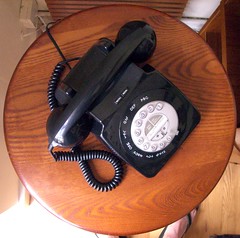
I made a mistake a while back.  I contributed to a political party.  The reason that was a mistake is now they will not stop calling me.   On a recent weekend (not during an election mind you), I got four calls asking for donations.  I have asked to be taken off of their call list.

Home phone
(Photo credit: :: Wendy ::)
In a similar mistake, I signed up for something online that is supposed to support my high school alma mater. Very soon I was getting emails every day trying to sell me something.  I have stopped even looking at those emails.  They now get deleted as soon as they show up in my inbox.  I haven't yet taken myself off of the distribution list out of some sort of alumni guilt.  That is probably going to change soon.

With the cost of reaching out to customers and prospective customers falling to almost nothing, it is more important than ever that companies and organizations remember who bears the greatest cost every time they reach out to a contact.  The contact does.

Even with permission marketing, you can reach out too much.  Even with those who are already your fans or supporters or customers, if you call four times in one weekend, you are going to annoy them.

Organizations need to understand that there is a cost of time and attention every time they call or email someone.  They need to be sensitive to the fact that both time and attention are in short supply for most people.  IF they are going to contact you frequently, they should provide you something of value with that contact.  IF they are going to contact you frequently, they should recognize that it is easy to cross the line into annoyance and get put on the don't call list.

In the best of situations, organizations create reasons for their customers and supporters to reach out to them!  It's hard to overdo it when you have your customers contacting you!
Enhanced by Zemanta

Monday, May 20, 2013

Frequency

There is a rule of thumb I use when talking with someone about how long they should run a particular ad or promotion.  About the time you absolutely cannot stand looking at your promotion anymore; when it is driving you nuts to look at or listen to the ad/promotion/billboard/poster/website/etc. one more time; when it seems as if every time you turn the page or log onto a site you see the ad...THAT is about the time your target audience is just starting to notice it.

This is, of course, a broad rule of thumb.  There are always those customers who are hyper-attuned to your brand who notice ads and posts well before the general public.  Because they care.

There are also those who don't give a hoot about your brand or your industry.  They could read or view everything you put and not remember it a moment later.  Because they don't care.

I think that this same rule of thumb is even more applicable these days.  It also now applies to information of all sorts, not just promotional information.  Since there are so many sources of information, people who care about a particular subject often know about news related to that subject long before that news makes it in the local paper or on the Yahoo news feed (if it ever does.)

While this makes it easier for someone to solidify their expert status, it also raises a red flag.  If you are a interested in local food, for instance, you most likely keep up with what is written about it, current best practices, new or pending legislation, etc.  For the local food advocate, monitoring this information across multiple streams of information has never been easier.

The challenge, as an advocate, is to recognize and remember that the general public isn't doing the same.  They don't have the same awareness of the topic that you do as someone who cares about the topic and is following it.

The challenge, as a marketer, is to figure out that sweet spot where you are sharing your message frequently enough to reach your target market, but not so frequently that you end up annoying those early adapters of your message.

Years ago, when I was working for a local hospital, I used my wife and daughter as models for an ad I needed to run.  It was a print campaign that ran mostly in the local newspaper.  Naturally, my whole family was VERY attuned to the ads I ran in the local paper.  My wife commented that it seemed like she came across the ad every time she turned the page in the newspaper.  I remember at the time the ad was running mentioning her comment to a colleague.  Oh, he said, are you running an ad?

If you are an advertiser, or an advocate, don't make the mistake that the general public is as aware of your topic as you are.  It is important to remember that in today's "seek it out" environment, those who are passionate about a subject, a product, a company or a cause WILL inform themselves.

Most likely your target audience is more than these passionate few.  Most likely most of your audience will need you to repeat yourself a few times.
Enhanced by Zemanta

Saturday, March 3, 2012

Could I have a few moments of your time?

The other evening, I got a call asking me to participate in a survey.  As I am a marketer and a communicator, I know the value survey feedback can provide and I am usually an easy mark when it comes to surveys.  I agreed after being told that the survey would only take "a few minutes."  15 minutes into the survey, with no signs of things slowing down, I was reminded of how a recent AP article reported that people are getting tired of being asked for feedback.  The article indicated that people in general are feeling fatigue when it comes to surveys.

Undoubtedly it is a good thing to ask your customers and other stakeholders for their input.  Without question, a company should consider customer feedback when evaluating new or changing product features.  And it is so easy these days!  Google the phrase "free survey tools" and you will get pages of options that let you send out quick little electronic surveys that look good and automatically tabulate the results for you.  You can generate charts and graphs of the results in seconds.  It is a beautiful thing!

Nevertheless, cheap and easy survey capabilities may actually be doing marketers a disservice.  When it costs thousands of dollars to even think about doing a survey, those hosting a survey have to carefully consider the questions they are asking and the value of the answers that they will get back.  Questions that yield answers that are not actionable are (usually) eliminated.  Redundant questions are culled.  Heck, some companies even pre-test their surveys!  Companies who pay to have their surveys done professionally have a financial incentive to make sure their surveys were tight and targeted and purposeful.

With the preponderance of cheap and easy to implement survey tools (Survey Monkey I'm talking about you!) it has been too easy to just dash off a quick survey without giving a lot of thought as to what the question is really asking, or what the results of the question will provide as far as usable and actionable data.  This means not only do we get approached to take more surveys on the computer or the phone, but the surveys themselves are more and more frequently confusing, inane, highly biased or just plain no fun to take!

So, if you are a marketer who is surveying your audience, my advice is to act as if you are paying thousands of dollars to have each question asked.  If you aren't going to get at least thousands of dollars of value from the answers, don't ask the question.

You might also like:Newspaper Survey

Tuesday, May 17, 2011

Frequency vs. consistency

A hundred years ago when I was in school taking marketing and advertising classes, Reach and Frequency was the mantra of the day.  In an era when mass media allowed you to reach everyone relatively cheaply, the way to get your message seen/heard/viewed and remembered was to make sure the message reached a broad audience and that the audience saw YOUR message frequently enough so that it would be remembered and, hopefully, acted upon.

With today's electronic media, and with some of recent and upcoming changes to the golden oldies of print, radio and TV, we can send customized messages to micro-targeted audiences inexpensively and efficiently.  Reach is still important, even though it now is a bit more nuanced.  I would argue, however, that frequency in less important these days.  Instead, the extreme targeting power of social and electronic media shifts the focus from frequency of message to consistency of message.

Old marketing messages no longer go into the recycling bin with the morning's newspaper.  They last forever on the internet.  What is almost more disconcerting is they can be found and read by your prospects with almost as much ease as they can find and read your current, intended message.  Because of this, I would argue that long-term consistency of message is as important, or more important, as frequency once was.

Reach and Consistency is the name of the new game!